Working Hours
Monday - Sunday: 9:30 AM – 9:30 PM
Friday- 9:30AM-12:00PM,1:30PM-9:30PM
Friday- 9:30AM-12:00PM,1:30PM-9:30PM
Working Hours

Most people walk out of the clinic with a brand-new implant and a vague idea that they should “brush carefully.” That is not enough. Dental implants can last decades, but that timeline depends almost entirely on what you do at home every single day. If you want to know how to properly care for dental implants without overcomplicating things, here is what actually matters.
Table Of Contents:
An implant is not a real tooth, but the gum and bone around it behave like they are. That tissue can still get infected. When bacteria build up around the base of an implant, it triggers a condition called peri-implantitis, which is basically gum disease for implants. Left unchecked, it can loosen the implant or cause bone loss around it.
The good news is that this is almost entirely preventable. It just takes consistency.
You do not need a complicated system. You need the right tools used the right way.
Use a soft-bristled toothbrush, not a stiff one. Hard bristles can scratch the surface of the implant crown and irritate the gum line around it. Brush twice a day, morning and night, spending at least two minutes on your teeth. Angle the brush slightly toward the gum line where the implant meets tissue. That junction is where bacteria love to hide.
Electric toothbrushes work well for implants. If you use one, keep the pressure light. The vibration does the work; you do not need to press hard.
This is where most people fall short. Regular floss works, but implant-specific floss or interdental brushes fit more easily around the implant post without snagging. Water flossers are another solid option since they flush debris out from areas a regular string simply cannot reach.
Aim to floss at least once a day, ideally before bed. Getting into the habit early, especially in the first few months after placement, sets you up well for long-term implant health.
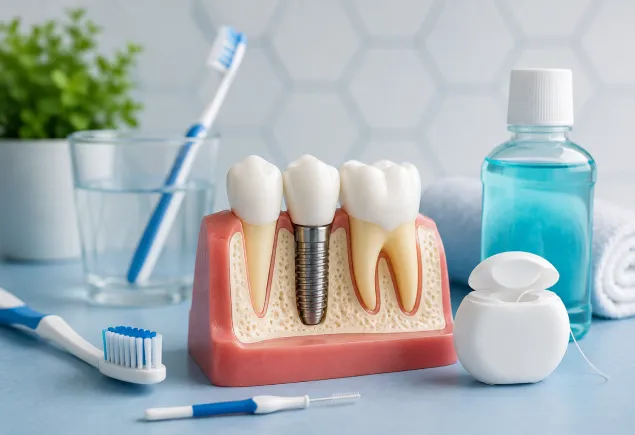
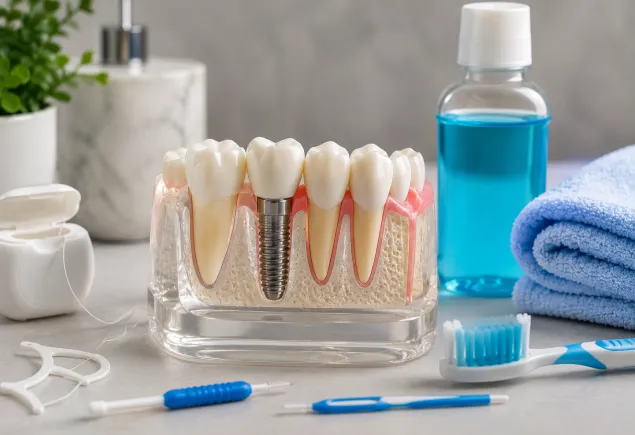
Alcohol-based mouthwashes can dry out gum tissue and cause irritation around the implant site. Go with an alcohol-free antibacterial rinse instead. Chlorhexidine rinses are sometimes recommended right after surgery, but they are not meant for permanent daily use. Ask your dentist what works best for your specific situation.
A few habits can quietly damage an implant over time.
Smoking is one of the worst things for implant longevity. It slows healing, reduces blood flow to gum tissue, and significantly raises the risk of infection. If you smoke, this is a real conversation to have with your dental team before and after the procedure.
Hard foods like ice, hard candy, and unpopped popcorn kernels put unnecessary force on the crown. The implant post itself is titanium and very sturdy, but the crown on top can chip or crack under enough pressure. Treat the crown the way you would a natural tooth.
Teeth grinding, known as bruxism, is another issue. If you grind at night, a custom night guard is worth considering. Ongoing grinding can stress the implant and surrounding bone over time.
Seeing your dentist regularly is part of caring for your implant at home because what happens at the clinic directly protects what you are doing on your own. Professional cleanings remove tartar buildup that brushing cannot handle. X-rays can catch early bone changes before they become a problem.
Most dental professionals recommend a check-up every six months for implant patients. If something feels off before that, like tenderness, swelling, or any looseness around the implant, do not wait for your next scheduled visit.
Al Rabeeh Dental Center in Muscat offers specialist implant services across their Al Khoud and Maabilah branches.
Proper care for dental implants is an investment in your health and comfort. Protecting that investment comes down to what you do on your own, day after day. Clean consistently, avoid the habits that cause damage, and keep your appointments.
Soft-bristled toothbrush, twice a day, angled toward the gum line. Add interdental brushes or a water flosser to get under the crown where a regular brush misses. Alcohol-free antibacterial mouthwash rounds it out nicely.
Every six months is the standard recommendation. Your dentist can catch early signs of peri-implantitis or bone changes before they turn into bigger problems.
In the early healing weeks, stay away from anything hard, chewy, or crunchy on that side. Long-term, the main things to watch are very hard foods like ice and hard candy, which can crack the crown.
Every six months is the standard recommendation. Your dentist can catch early signs of peri-implantitis or bone changes before they turn into bigger problems.

Al Rabeeh Dental Center provides comprehensive, ethical dental care using international standards and advanced technology to deliver healthy, confident smiles.
©2026. Al Rabeeh Dental Center LLC.All Rights Reserved. Powered by SilverHost

