Working Hours
Monday - Sunday: 9:30 AM – 9:30 PM
Friday- 9:30AM-12:00PM,1:30PM-9:30PM
Friday- 9:30AM-12:00PM,1:30PM-9:30PM
Working Hours

A digital dental x-ray gives the dentist a look at what sits beneath the enamel: the roots, the bone structure holding each tooth in place, and any gaps between teeth where a cavity might be hiding. Sensors capture the image in seconds and display it on a screen right away, so the dentist can point to the exact spot being discussed rather than describing it in the abstract.
This matters for anything beyond a routine cleaning. Planning a dental implant requires knowing the bone density and available space before any surgical step happens. A suspected root canal case needs imaging to confirm how far an infection has spread through the root canal system. Orthodontic cases use imaging to map how teeth are angled beneath the gum before braces or aligners go on.
Not all dental x-rays look for the same thing.
Not every visit needs every type. A general dentistry checkup might only call for a bitewing, while a suspected jaw issue or wisdom tooth concern usually needs a panoramic view.
Pain isn’t the only trigger. A dentist will usually recommend imaging when there’s swelling near the gum, a tooth that’s sensitive to temperature without an obvious cause, a chipped or cracked tooth after an accident, or before any implant, root canal, or orthodontic treatment plan. Children often need occlusal or panoramic imaging around ages six to twelve, since that’s when adult teeth are moving into position and a dentist needs to see whether there’s enough room.
New patients walking into a clinic for the first time typically get imaging as part of the initial exam. It gives the dentist a baseline record, so any change at a future visit is easy to spot against what was there before.
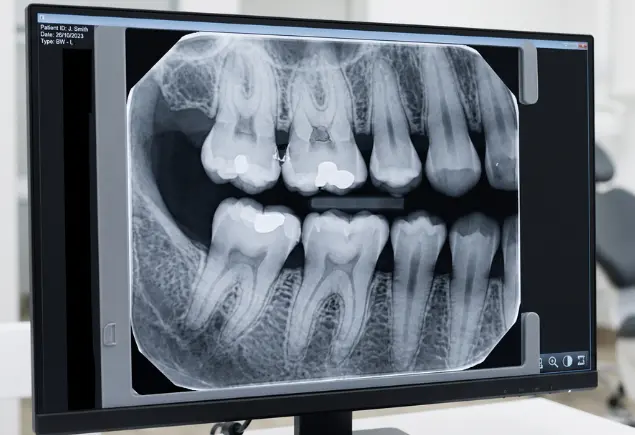
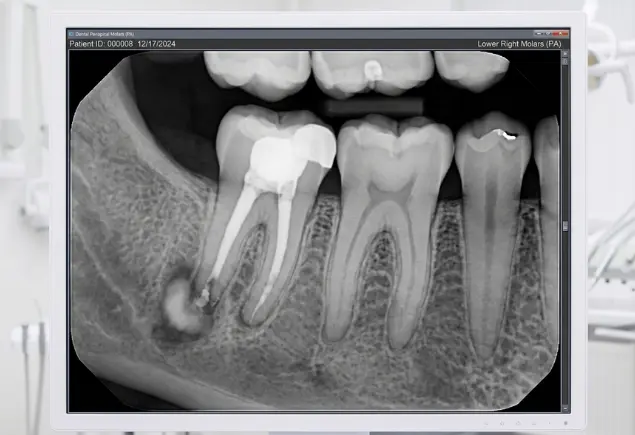
Cost depends on the type and how many images are needed. A single bitewing or periapical image costs less than a full panoramic scan, since panoramic equipment captures more anatomy in one exposure. A full-mouth series for a new patient costs more than a single follow-up image for one tooth. Clinics in Muscat generally price imaging as a standalone diagnostic step, separate from whatever treatment follows, so ask for the breakdown before the appointment if budget is a concern.
Radiation exposure from a dental x-ray is genuinely low. According to the American Dental Association, a dental x-ray can deliver less radiation than a person receives in a single day just from natural background sources. The ADA’s current guidance also confirms that imaging should only be ordered when there’s a clear clinical reason for it, which is the same approach any responsible clinic should be following already.
A dental x-ray isn’t an upsell tacked onto a checkup. It’s the difference between catching a problem at the two-millimeter stage or the root canal stage. If it’s been over a year since your last dental visit, or your child is somewhere between six and twelve, ask your dentist whether imaging is due at your next appointment.
It depends on your risk level, not a fixed calendar. Someone with healthy gums and no cavity history might only need imaging every two years. Someone with a history of decay or gum disease might need it every six to twelve months. Your dentist should explain the reasoning at your visit, not just schedule it automatically.
No. The sensor or film sits against your teeth for a few seconds while the image captures. Some people feel mild pressure from the sensor’s edge, especially with back teeth, but there’s no pain involved in the process itself.
Yes, and putting it off often causes more problems than the imaging itself would. An untreated infection during pregnancy carries its own risks, so dentists weigh that against the very low dose a modern digital sensor produces. A lead apron over the abdomen is standard practice for extra reassurance, even though current guidance says the exposure level alone is already minimal. Tell your dentist you’re pregnant before any imaging so they can confirm it’s actually needed right now versus something that can wait until after delivery.
Because a bitewing only shows a narrow strip of teeth, and your dentist needed a wider view. Impacted wisdom teeth, a jaw joint that’s been acting up, or bone loss across a larger area all show up better in one panoramic shot. If wisdom teeth or jaw pain came up before the order, that’s usually why.
Not automatically. Some clinics include a baseline x-ray for new patients as part of the first visit, but ongoing checkups usually only add imaging when there’s a specific reason, such as new sensitivity or a visible change since the last appointment.

Al Rabeeh Dental Center provides comprehensive, ethical dental care using international standards and advanced technology to deliver healthy, confident smiles.
©2026. Al Rabeeh Dental Center LLC.All Rights Reserved. Powered by SilverHost

