Working Hours
Monday - Sunday: 9:30 AM – 9:30 PM
Friday- 9:30AM-12:00PM,1:30PM-9:30PM
Friday- 9:30AM-12:00PM,1:30PM-9:30PM
Working Hours

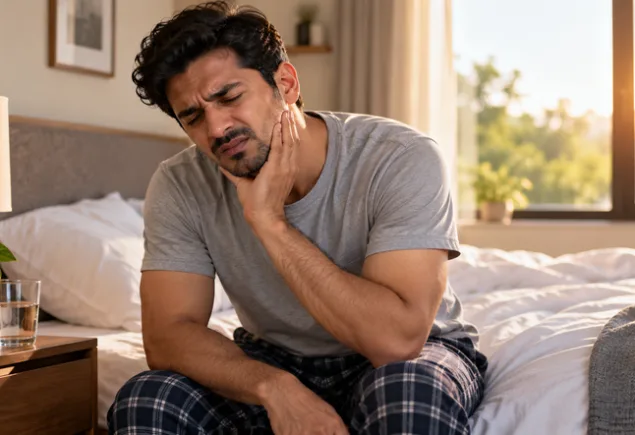
You wake up with a dull ache near your temples and a jaw that feels tired before the day has even started. Plenty of people trace that feeling to teeth grinding at night, usually after a partner mentions a rasping sound in the dark.
The medical term is bruxism. Some people grind, some clench without any noise, and some do both. The Mayo Clinic classes sleep bruxism as a sleep-related movement disorder. An occasional bout rarely does harm. Frequent grinding is where the trouble starts.
Table Of Contents:Most people sleep through their own grinding, so the evidence turns up elsewhere. Teeth can look flattened or chipped or feel sensitive. Because the wear builds slowly, few people see a dentist when it first begins. The jaw may feel tight on waking, and some people notice pain in the face or ear. A daytime habit of teeth biting on pens or nails is worth noticing too, along with any jaw clenching while you concentrate.
A routine dental examination is where wear usually gets spotted. The dentist checks for decay, gum depth, your bite and the soft tissues, and the visit takes roughly 20 minutes. Most adults are advised to go twice a year. If you suspect teeth grinding at night, say so at that visit so the dentist can look harder at your bite and tooth surfaces.
Nobody has a tidy answer. Mayo Clinic says the exact cause is not fully understood and probably mixes physical, psychological and genetic factors.
A few triggers keep coming up. The NHS names stress and anxiety as the most common one and lists sleep problems such as snoring and sleep apnoea right behind it. Sleep bruxism tends to happen in lighter stages of sleep, in short bursts tied to brief arousals. Smoking, heavy alcohol use and caffeine are also on the list, along with some medicines, including certain antidepressants. It can run in families too.
None of these proves anything alone. They are patterns clinicians look for, not a diagnosis. Anyone taking prescribed medicine should ask the prescriber before changing a dose.
It can be linked to them. The Mayo Clinic lists a dull headache starting at the temples among the symptoms of bruxism, and The Sleep Charity names headaches, a sore jaw and facial pain as common effects. The jaw muscles reach up the side of the head, so hours of overnight tension may be felt right at the temples by morning.
Still, be careful. Morning headaches have plenty of other causes, including poor sleep and sleep apnoea, so grinding is one possible explanation and not the only one. Get urgent medical help for a sudden severe headache, one that follows a head injury, or one that arrives with fever, vision changes, weakness or confusion. A short diary of when the headaches show up helps both professionals spot a pattern. A dentist can see if wear and jaw tenderness fit grinding, and a doctor can look at everything else.
There is no single off switch, and treatment is not always needed. The NHS says as much, and the Mayo Clinic adds that many children outgrow it, while many adults grind too mildly to need therapy. Still, some habits tend to help.
Start with stress, since it leads the list of causes. Exercise, a calm hour before bed and a chat with a GP or counsellor about ongoing anxiety are sensible first moves. Cutting back on alcohol, caffeine and smoking, and keeping steady sleep hours are standard self-care advice too. Mayo Clinic specifically suggests skipping caffeinated tea or coffee after dinner and avoiding evening alcohol, since both may worsen grinding.
Daytime matters as well. Aim for lips together, teeth slightly apart and jaw muscles loose. Skip chewing gum and stop gnawing on pens, which feeds the teeth biting habit.
Loud snoring, pauses in breathing or heavy daytime sleepiness deserve a medical check for sleep apnoea. Treating a sleep disorder can ease sleep bruxism, according to the Mayo Clinic.
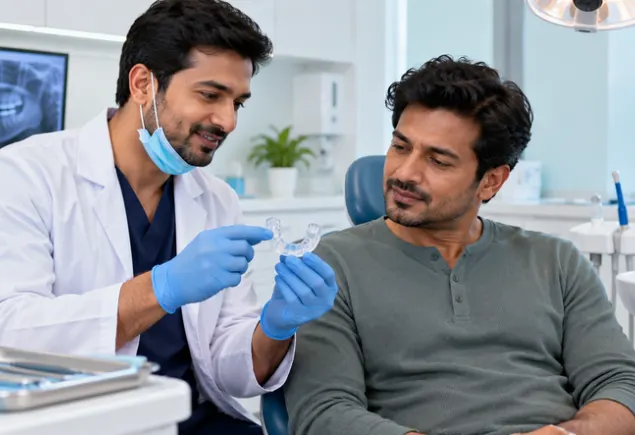
Finally, let a dentist keep watch. Worn or cracked teeth can be monitored and repaired, and the dentist can talk through options that suit your mouth.
Grinding often points back to stress, sleep and daily habits more than to the teeth themselves. For two weeks, jot down jaw soreness on waking, temple headaches and anything a partner hears, then take the notes to a dentist. Routine examinations at Al Rabeeh Dental Center in Muscat include a bite check and general dentistry examinations. This article is general education, not a diagnosis. Which pattern will you start tracking tonight?
Occasional grinding is common and often harmless. It becomes a concern when it happens often enough to wear teeth, strain the jaw or bring on morning headaches. If a partner hears it regularly, mention it at your next dental check.
Overnight clenching can leave the jaw muscles tired and tender by morning. Joint problems and other issues can cause similar soreness, though, so a dental or medical check helps sort out which one applies to you.
The NHS ranks stress and anxiety as the most common triggers. Sleep apnoea, alcohol, caffeine and smoking show up often as well. Some people grind with no obvious stress at all.
Most people tolerate modern techniques well. Local anaesthetic is used for deep cleaning and surgery. Mild sensitivity for a day or two afterwards is normal and usually settles with standard over-the-counter pain relief.

Al Rabeeh Dental Center provides comprehensive, ethical dental care using international standards and advanced technology to deliver healthy, confident smiles.
©2026. Al Rabeeh Dental Center LLC.All Rights Reserved. Powered by SilverHost

