Working Hours
Monday - Sunday: 9:30 AM – 9:30 PM
Friday- 9:30AM-12:00PM,1:30PM-9:30PM
Friday- 9:30AM-12:00PM,1:30PM-9:30PM
Working Hours

Braces for adults are no longer the exception in Muscat clinics; they are becoming routine. More professionals in their thirties and forties are walking into orthodontic consultations, often after years of putting it off. The reasons vary. A shifted bite, a childhood retainer that got skipped, or simply the confidence to finally do something about it once career and family life settle down.
Table Of Contents:
Adult teeth have finished growing, which changes how treatment gets planned. There’s no jaw growth to guide, so a specialist has to work with the bone and bite structure exactly as it exists. This is one reason board-certified orthodontists matter more at this stage, not less. At Al Rabeeh Dental Centre, digital treatment planning uses 3D scans rather than the old putty impressions, giving a clearer picture of tooth movement before any bracket goes on.
Clear aligners have become a natural fit for working adults who want straightening without the visible metal look. The trays can be removed for meals and important meetings, and most people adjust to the daily habit within a couple of weeks.
Not every adult wants the same appliance, and that’s the point of having options.
Invisalign appeals to professionals who want something close to invisible. The aligners come off for eating and photos, which matters a lot to someone in client-facing work.
Damon braces use a self-ligating mechanism that reduces friction on the wire. That tends to mean fewer adjustment visits and, for many patients, a shorter overall timeline compared with older bracket systems.
Lingual braces sit behind the teeth, invisible from the front. Adults in public-facing roles, teaching, sales, and media, often ask about this option specifically because nobody can tell the treatment is happening at all.
Metal and ceramic braces remain the most tested route. Metal is the more economical choice; ceramic gives a less visible look while keeping the same mechanical reliability. Both work well on cases that are complex or where cost control matters more than discretion.
Nobody gets a straight answer to “How much do braces cost?” and there’s a reason for that. Cost depends on several things that only become clear during a proper consultation.
Case complexity is the biggest factor. Crowding, bite misalignment, and previous orthodontic history all affect how much work is involved and how long treatment runs.
Appliance choice matters too. Metal tends to sit at the lower end, ceramic and Damon systems cost more due to the materials and technology involved, and Invisalign or lingual braces are priced differently again because of the custom fabrication each case requires.
Treatment duration plays a role as well. Most adult cases at Al Rabeeh run somewhere between twelve and twenty-four months, though simpler cases sometimes wrap up sooner. Longer treatment generally means more adjustment visits, which affects the total.
Additional prep work, such as digital scans, x-rays, or addressing gum health before braces go on, can also shift the final figure. A clinic that gives a transparent breakdown from the first visit, rather than a vague estimate, makes this whole process far less stressful.
According to guidance published by the American Dental Association about adult orthodontic care, adult treatment plans commonly take longer than adolescent ones because bone remodels more slowly with age, which is a fair expectation to walk in with.
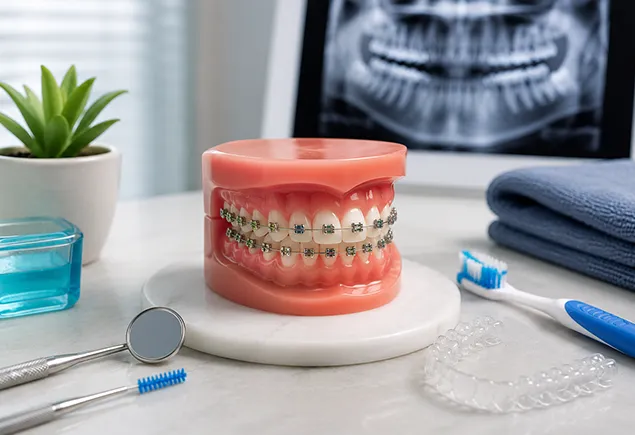
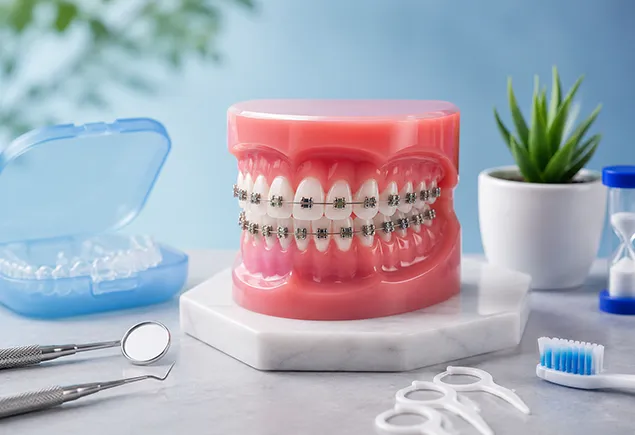
The first week after getting braces or switching aligner trays usually brings mild pressure or soreness. This is the tooth actually moving, not something going wrong. It settles within a few days for most people.
Adults juggling work calls and braces sometimes worry about speech changes, especially with lingual braces. A short adjustment period is normal, and it typically resolves as the tongue gets used to the new surface.
Multilingual staff and evening clinic hours matter more for working adults than people expect going in. Appointments that fit around a workday, rather than forcing time off, make it far easier to stay consistent with a treatment plan that runs over a year or more.
Choosing braces for adults in Muscat isn’t about vanity; it’s about finally fixing something that’s been sitting on a to-do list for years. The right choice between metal, ceramic, Damon, lingual, or Invisalign comes down to lifestyle, budget, and how much visibility you’re comfortable with during treatment. A proper consultation, with a clear breakdown of what your specific case involves, is the only way to get real answers instead of guesses. What’s stopping you from booking that first evaluation?
Not at all. Adult teeth respond to orthodontic movement just as well as younger teeth; it just takes patience since bone remodels more gradually. Plenty of patients start treatment well into their thirties and forties with solid results.
Depends entirely on what you choose. Lingual braces sit behind your teeth and stay hidden. Invisalign is nearly invisible too. Ceramic braces blend in better than metal if you want a middle ground option.
Most adult cases run between twelve and twenty-four months. Simpler crowding can wrap up faster, while more complex bite issues take longer. Your specialist gives a realistic timeline after reviewing your scans.
Case complexity, appliance type, and treatment length are the three biggest factors. A clinic that walks you through this openly during your first visit saves you from surprises later.

Al Rabeeh Dental Center provides comprehensive, ethical dental care using international standards and advanced technology to deliver healthy, confident smiles.
©2026. Al Rabeeh Dental Center LLC.All Rights Reserved. Powered by SilverHost

