Working Hours
Monday - Sunday: 9:30 AM – 9:30 PM
Friday- 9:30AM-12:00PM,1:30PM-9:30PM
Friday- 9:30AM-12:00PM,1:30PM-9:30PM
Working Hours

Dental implants before and after comparisons usually focus on the smile in the mirror. The real story sits underneath it, in the jawbone, the bite, and the small daily habits that shift once a missing tooth gets replaced properly. Patients walking into Al Rabeeh Dental Center in Muscat often ask the same thing before they commit to treatment: what will genuinely feel different once this is done?
Table Of Contents:A gap left by one missing tooth rarely stays the same size. Many patients notice they avoid certain foods first, like apples, corn on the cob, and anything that demands real bite force, then later notice the jawbone underneath the gap thinning. That loss happens because bone needs the pressure of a tooth root to stay dense, and without it, the ridge can shrink enough to change the shape of the lower face over several years.
A dental implant addresses the cause rather than the symptom. A titanium post is placed directly into the jawbone, where it fuses to the bone through a process called osseointegration, a mechanism explained in more detail by Cleveland Clinic. Once healed, that post functions as a replacement root rather than a surface-level fix.
The comparison patients describe most often is chewing. Once the implant has integrated and a permanent crown is fitted, foods that were off the table, crunchy vegetables, tougher cuts of meat, and firm fruit generally become manageable again because bite force transfers through bone rather than resting on a loose plate. Speech tends to steady out too, since a fixed restoration doesn’t shift the way a removable one can.
Facial contour is the slower change. Because a titanium implant continues to stimulate the surrounding bone the way a natural root once did, it can help preserve the jaw’s shape rather than let it recede further.
When several teeth are missing rather than one, the approach changes. A fixed bridge anchored to strategically placed implants can restore a full section of the bite without touching the healthy teeth on either side and without a removable partial in the mix.
For patients missing most or all of the teeth in an arch, All-on-4 dental implants use four angled titanium posts to support a complete arch of fixed teeth. That generally means less total treatment time than replacing each tooth individually, and in many cases, temporary teeth are fitted the same day the posts go in. All-on-6 follows the same principle with two additional posts, spreading chewing force across six points instead of four, which suits some patients with moderate bone loss better.

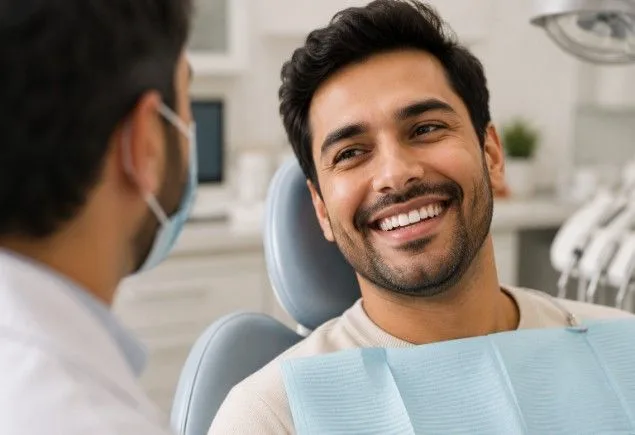
Not every patient has enough bone density to place an implant right away, and that’s a normal finding rather than a dead end. Bone grafting, through procedures such as sinus lifts or ridge augmentation, rebuilds the foundation first so an implant has something solid to fuse to later.
Before any of that gets decided, a consultation typically includes a full medical history review and 3D imaging using cone-beam computed tomography, mapping bone density and nerve position down to the millimetre so the surgical plan is worked out before anyone sits in the chair. Materials used throughout the process, titanium posts and grafting substances alike, are expected to meet safety standards set by regulatory bodies such as the FDA, a point covered in the National Institute of Dental and Craniofacial Research’s overview of dental materials research.
Most patients move through three broad phases. Surgical placement is usually a single visit, often followed by temporary teeth so there’s no visible gap while healing takes place. The bone then needs time to fuse around the post, generally three to six months, though this varies by individual and stretches longer when grafting was needed first.
Once integration is confirmed, final impressions are taken and a permanent, color-matched crown or bridge is fitted. Many people return to work within a few days of the surgical step, though recovery pace differs from person to person, and follow-up visits exist to confirm healing is on track rather than assume it.
The clearest way to think about dental implants before and after is less about one dramatic reveal and more about a gradual return to normal: eating without hesitation, speaking without a second thought, and a jawbone that holds its shape instead of losing it. If you’re trying to work out whether you’re a candidate or what your own timeline might look like, an initial consultation is usually the fastest way to get a clear, individual answer. What’s the one thing about your current smile you’d actually want to change first?
Most people are looking at three to six months total, sometimes longer if bone grafting comes first. The chair time itself is short. Almost all of that stretch is your body quietly fusing bone to the post in the background while you go about normal life.
Honestly, less than people expect. It’s done under local anesthesia, sedation is available too, and most patients describe a couple of days of mild soreness afterward, similar to a tooth extraction. Over-the-counter pain relief usually covers it.
That’s more common than you’d think, and it doesn’t rule you out. Bone grafting rebuilds the area first, and your consultation will include imaging to check density before anyone decides on a plan.
Pretty close, once healing and osseointegration are complete. You bite, chew, and speak using the same bone-anchored support your natural roots gave you. It won’t feel identical from day one, but most people stop noticing the difference within a few weeks.
It’s uncommon; failure happens in under five percent of cases, usually linked to smoking, uncontrolled gum disease, or poor healing. Your team monitors progress at scheduled visits specifically to catch this early, rather than leaving it to chance.

Al Rabeeh Dental Center provides comprehensive, ethical dental care using international standards and advanced technology to deliver healthy, confident smiles.
©2026. Al Rabeeh Dental Center LLC.All Rights Reserved. Powered by SilverHost

