
You’ve been told your jawbone is too thin for dental implants. It feels like a dead end. But here is the reality: a “no” from ten years ago is often a “yes” today. Modern dentistry has moved past the limitations of natural bone structure. If you are looking for a low bone density tooth replacement, you have more options than you might think.
At Al Rabeeh, we see patients every day who thought they were stuck with loose dentures forever. They aren’t. Technology has caught up to the human body.
Table Of Contents:
The short answer? Yes, absolutely. While a traditional implant needs a sturdy base of bone to anchor into, specialized techniques now allow us to work around a lack of volume. We don’t just give up because the foundation is thin. We rebuild it or find a different way to anchor the hardware.
Bone loss is natural after you lose a tooth. The jaw starts to shrink because it no longer has a root to support. But that doesn’t mean your journey to a permanent smile is over.
We usually look at two main paths: rebuilding the bone or using specialized implants. Bone grafting is the most common fix. We take a small amount of bone material and place it where you need it most. Over a few months, your body heals, and suddenly you have a thick, strong foundation.
If grafting isn’t the right fit, we look at zygomatic implants or mini implants. These are designed to bypass the thin areas of the jaw entirely. They anchor into denser bone structures nearby, providing the same stability as a standard implant.
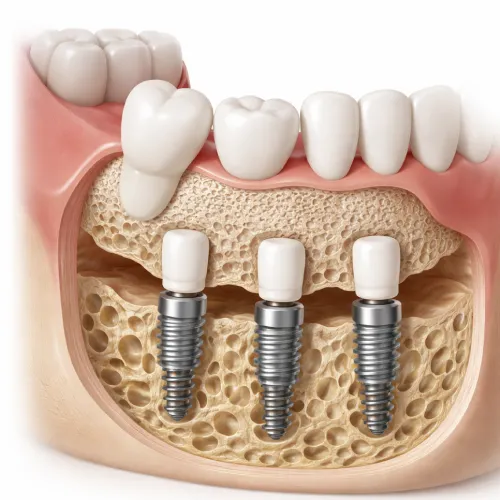
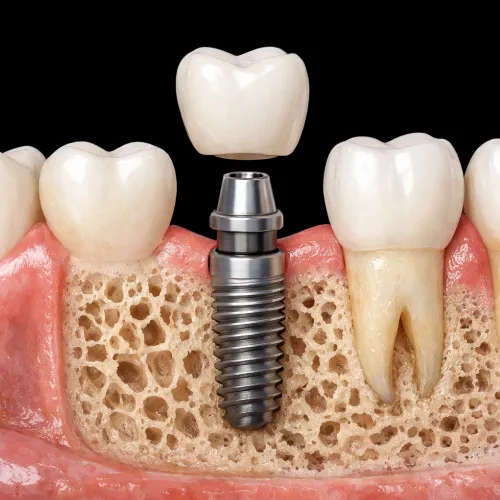
Think of it like adding soil to a garden before planting. We place the grafting material into the site of the missing tooth. Your natural bone then grows into and around this material. It’s a biological fusion. Once that area is dense enough, we place the implant.
This process ensures that your low bone density tooth replacement doesn’t just look good but actually lasts for decades. It prevents that “sunken” look that often happens with long-term tooth loss.
Bone loss is a progressive problem. The longer you wait, the more your jawbone recedes. This makes the eventual procedure more complex. By addressing it now, you save yourself time and more intensive surgery down the road.
At Al Rabeeh, we use advanced 3D imaging to map out your jaw in high definition. This lets us see exactly where the strongest bone is, even if it’s hidden. We don’t guess. We plan. Whether it is a single tooth or a full mouth restoration, a low bone density tooth replacement strategy is built around your specific anatomy.
A thin jawbone isn’t the dealbreaker it used to be. It’s just a hurdle that requires a smarter approach. You deserve a smile that feels as real as it looks.
Honestly? You’ll be numb during the procedure. Afterward, it feels like a bit of pressure or a dull ache, similar to having a tooth pulled. We make sure you have the right meds to keep it comfortable.
It isn’t overnight. You’re looking at about three to six months for the bone to get strong enough to hold the implant. It’s a marathon, not a sprint, but the result lasts a lifetime.
Yes. Whether we use mini implants or zygomatic ones, the goal is the same: total stability. You’ll be able to eat steak and crunchy apples just like everyone else.
Your jaw continues to shrink. This can eventually change the shape of your face and make even basic dentures uncomfortable or impossible to wear.

Al Rabeeh Dental Center provides comprehensive, ethical dental care using international standards and advanced technology to deliver healthy, confident smiles.
©2026. Al Rabeeh Dental Center LLC.All Rights Reserved. Powered by SilverHost

