Working Hours
Monday - Sunday: 9:30 AM – 9:30 PM
Friday- 9:30AM-12:00PM,1:30PM-9:30PM
Friday- 9:30AM-12:00PM,1:30PM-9:30PM
Working Hours

Swollen gums with braces catch plenty of people off guard. The gum line looks fuller, brushing feels tender, and a pink edge appears around the brackets that weren’t there a month ago. There is often an ordinary explanation, and a few daily habits are worth knowing. This guide covers what tends to sit behind the puffiness, how different braces change your cleaning routine, and when a dental visit is the sensible next step. It is general education and not a diagnosis, so anything that worries you deserves a proper look from a dentist.
Fixed braces add brackets and wires to each tooth they cover. Food and plaque, the soft film that builds on teeth through the day, suddenly have more corners to settle into along the gum line. Gums sitting beside that leftover plaque can turn red, puffy, and tender, which dentists describe as gum inflammation.
Moving teeth add their own sensations. Mild pressure or soreness when braces are first fitted, or when a new aligner goes in, is expected and typically fades within a few days. Swelling that hangs around well past that window tends to point toward plaque rather than tooth movement.
Time matters too. Most cases take between 12 and 24 months, depending on the complexity of the case, the appliance and how closely the orthodontist’s guidance is followed. A cleaning routine built in the first week gets used for a long stretch.
Calm, consistent cleaning does most of the work. Angle the toothbrush toward the gum line so the bristles reach above and below every bracket, and give each tooth its turn, back ones included. Small interdental brushes slide beneath the archwire where a regular brush can’t go, and floss threaders handle the spaces between teeth. A fluoride toothpaste and an unhurried routine suit tender gums better than hard scrubbing, which can irritate them further.
A simple rhythm is brushing morning and night, cleaning between teeth once a day, and a quick water rinse after snacks. Rinsing loosens food from around the brackets. Sticky and hard foods tend to cling to appliances, so cutting back while your mouth adjusts leaves the gums less to deal with.
Swollen gums with braces often ease once plaque is cleared away every day, though a dentist should confirm the cause rather than leaving it to guesswork.
The appliance in your mouth shapes how cleaning feels. Orthodontic options include metal and ceramic braces, Damon self-ligating braces, lingual braces, and clear aligners such as Invisalign.
Metal and ceramic braces sit on the front of the teeth, so each bracket needs patient attention. Damon braces use a sliding mechanism that lowers friction and pressure, and they usually need fewer adjustment visits. Lingual braces are bonded behind the teeth, which changes the brushing angle. Clear aligners come out for meals, so brushing and flossing stay easier throughout treatment.
None of these is automatically gentler on gums. The right choice depends on the case, and the orthodontist makes that call after examining your teeth.
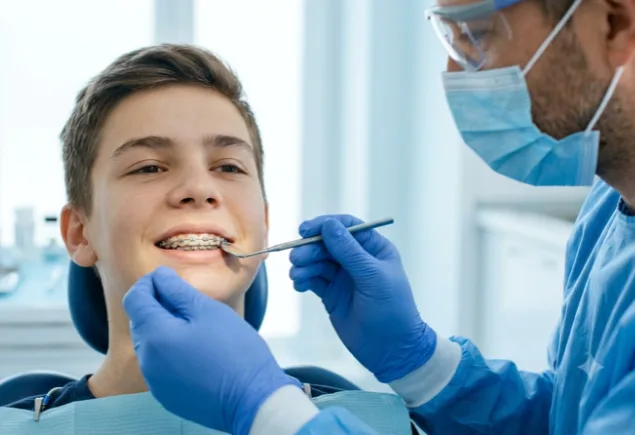

Book an appointment if swelling persists despite careful cleaning, gums bleed easily, or tenderness appears without a clear reason. Routine dental visits help detect problems early and keep teeth and gums healthy, which counts for more when brackets make home cleaning slower.
A dentist will usually look at how the gums sit around each bracket and talk through how cleaning is going. Mention when the swelling started, what changed, and which products you use, since small details speed up the answer. If gum disease turns out to be the cause, periodontal therapy is the targeted treatment for it. Severe pain or swelling in the face needs urgent dental care and shouldn’t wait for a routine slot.
Swollen gums during orthodontic treatment often trace back to plaque collecting around the appliance, and steady cleaning plus regular dental reviews give them room to settle. Al Rabeeh Dental Center in Muscat has orthodontic and gum treatment services, so persistent swelling can be looked at alongside the braces themselves. How does your routine look around the brackets right now, and what would you change first?
Mild tenderness is common while your mouth adjusts, and soreness from tooth movement tends to fade within a few days. Gums that stay puffy after that usually need better cleaning around the brackets. If they don’t settle, a dentist should take a look.
Tilt the brush toward the gum line, then work above and below each bracket slowly, tooth by tooth. Add a small interdental brush for the space under the wire. Go gently, because hard scrubbing irritates sore gums more than it cleans.
Yes. Ongoing bleeding or swelling is worth mentioning at your next visit, and sooner if it bothers you. Your orthodontist can check the gums, review how you clean, and arrange gum treatment if it’s needed.
Aligners come out for meals and make brushing and flossing easier, which helps keep the gum line clean. That said, no option is automatically gentler on gums. Your orthodontist picks the right one based on your teeth and bite.

Al Rabeeh Dental Center provides comprehensive, ethical dental care using international standards and advanced technology to deliver healthy, confident smiles.
©2026. Al Rabeeh Dental Center LLC.All Rights Reserved. Powered by SilverHost

