Working Hours
Monday - Sunday: 9:30 AM – 9:30 PM
Friday- 9:30AM-12:00PM,1:30PM-9:30PM
Friday- 9:30AM-12:00PM,1:30PM-9:30PM
Working Hours

That first sip of iced water should feel good. When it sends a sharp jolt through a tooth instead, you are dealing with teeth sensitive to cold, and the trigger is sometimes the gums rather than the tooth. Gum disease is one known cause, and sensitivity to hot or cold foods appears on the list of its warning signs. Here is how the two connect, which signs matter, and when a dentist should take a look.
Table Of Contents:Gum disease begins when bacteria infect the gums and the bone that holds teeth in place. It builds slowly, so the early stages are easy to miss. Receding gums are a good example. As tissue pulls back, teeth look longer than they used to, and cold and tooth pain can join the picture.
The numbers explain why this deserves attention. The American Academy of Periodontology reports that gum disease affects roughly half of adults worldwide and is the leading cause of tooth loss in people over 35. A twinge from a cold drink is worth a second thought, not a shrug.
Gums are not always the whole story, though. Sensitivity is one sign among several, so a dentist looks at the full picture before naming a cause. Guessing at home rarely settles it.
Gum disease moves through two main stages. Gingivitis comes first. It is early inflammation caused by plaque, and it brings red, swollen or bleeding gums along with bad breath. Professional cleaning and better oral hygiene can reverse it fully.
Periodontitis is the later stage. The infection runs deeper and reaches bone and supporting tissue, so gums recede, pockets form, teeth loosen and bone is lost. Treatment can manage it, but it cannot fully undo the damage. Left alone, the disease breaks down the bone and ligament anchoring the teeth, and tooth loss can follow. Timing matters.
Teeth sensitive to cold rarely tell the whole story by themselves. Watch for these alongside them:
Two or more of these together make a solid reason for a gum health evaluation. Pus, loose teeth or swelling should not wait. Jot down which tooth reacts, how long the sting lasts and whether your gums bleed. That short note gives a dentist something concrete to work from.
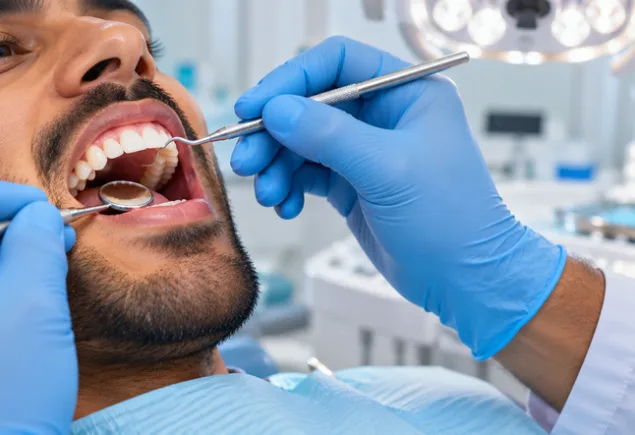
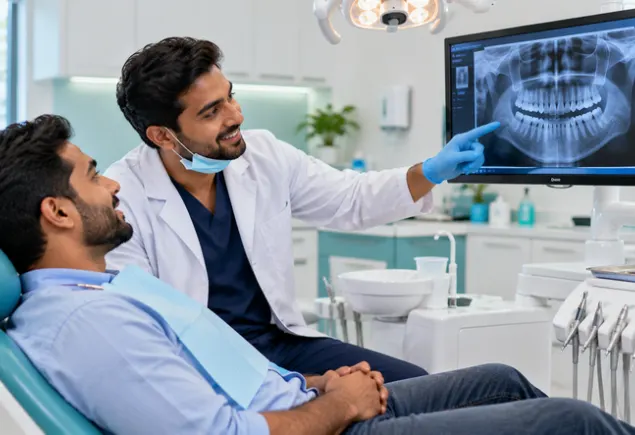
Get an exam when the sensitivity keeps coming back or the signs above begin to stack up. Digital X-rays and imaging let a dentist see what a mirror cannot. A periodontist, the specialist for gum care, then builds a plan around the findings.
For early to moderate gum disease, scaling and root planing are the main non-surgical routes. A hygienist removes hardened tartar from the gumline and smooths the root surfaces so bacteria have a harder time reattaching.
Laser-assisted gum therapy is another option. It targets infected tissue with less bleeding, less discomfort and faster healing than conventional surgery. Advanced cases with major bone loss may need flap surgery or bone grafting, done under local anaesthetic.
Recovery looks like this. Mild sensitivity for 24 to 48 hours after treatment is normal and usually eases with standard over-the-counter pain relief, but your dentist’s aftercare instructions come first. Mild cases may settle in one or two visits, while moderate to severe ones usually take four to eight weeks, followed by maintenance visits every three to four months to keep the disease from returning.
Cold drinks should not hurt. When they do, the gums deserve a look before anything else takes the blame, because gum disease is common and simpler to manage when caught early. This article is general education, not a diagnosis, and only a dental exam can name the cause behind your pain. If you are in Muscat, the dental team at Al Rabeeh Dental Center can examine your gums and explain what they find. Which of those warning signs have you already noticed?
Sometimes the gums are involved. Receding gums are a recognised sign of gum disease, and sensitivity to hot or cold foods sits on the same warning list. A dental exam is the only way to know which cause applies to you.
It can be one sign, but rarely the only one. Look for bleeding gums, swelling, bad breath that lingers, longer-looking teeth or loose teeth. Two or more together are worth a gum health evaluation.
Early gum disease, called gingivitis, is fully reversible with professional cleaning and better oral hygiene. Advanced periodontitis can be managed well, but once bone is lost, it cannot be fully reversed. That is why catching it early matters.
Most people tolerate modern techniques well. Local anaesthetic is used for deep cleaning and surgery. Mild sensitivity for a day or two afterwards is normal and usually settles with standard over-the-counter pain relief.
Mild cases may need just one or two visits. Moderate to severe ones usually take four to eight weeks of appointments, then maintenance visits every three to four months to keep things stable.

Al Rabeeh Dental Center provides comprehensive, ethical dental care using international standards and advanced technology to deliver healthy, confident smiles.
©2026. Al Rabeeh Dental Center LLC.All Rights Reserved. Powered by SilverHost

