Working Hours
Monday - Sunday: 9:30 AM – 9:30 PM
Friday- 9:30AM-12:00PM,1:30PM-9:30PM
Friday- 9:30AM-12:00PM,1:30PM-9:30PM
Working Hours

You have a bad tooth. Maybe it has been aching for weeks. Maybe your dentist just told you it needs to come out. Either way, the first thing most people want to know is whether it is going to hurt. That is a fair question, and knowing how to painlessly remove a tooth starts with understanding which type of extraction you actually need.
There are two categories: simple extractions and surgical extractions. They are not interchangeable, and the difference matters more than most people realize. At Al Rabeeh Dental Center in Muscat, oral surgery cases are handled by clinicians who specialise in surgical procedures specifically.
Table Of Contents:
Both types involve local anaesthetic. Full stop. You will not feel pain during either procedure. What you might feel is pressure, some movement, and occasionally a pop. That is it. The distinction between simple and surgical is not about pain; it is about access.
When a tooth is still above the gumline, has roots your dentist can work with using standard instruments, and is not fused to the surrounding bone, the extraction is classified as simple. That covers a lot of territory. Teeth pulled before orthodontic treatment. Badly decayed teeth that cannot be saved with a root canal. Teeth that have become loose because of gum disease.
The procedure is quick. You are numb, the tooth is loosened, and it comes out. Most people are surprised by how undramatic it actually is. Recovery is a day or two of soreness and some swelling, nothing that paracetamol and soft food cannot handle.
Not every tooth cooperates. Some break at the gumline before they can be grasped properly. Some have roots that curve around the bone in a way that makes a direct pull impossible. Some have never fully come through the gum at all. These are the situations that require a surgical approach.
Impacted wisdom teeth sit at the top of this list. A wisdom tooth that is growing sideways, pressing into the tooth beside it, or sitting half-erupted with bacteria collecting around it is not going to resolve on its own. It tends to cause recurring infection, jaw stiffness, and crowding over time. The longer it stays, the messier the situation becomes.
In a surgical extraction, the dentist makes a precise incision in the gum tissue, may remove a small amount of bone around the tooth, or divide the tooth into sections to ease it out without unnecessary force. Under local anaesthetic, you feel none of this. The recovery period is longer than a simple extraction, but it is not weeks in bed. Three to five days is when most people turn a corner, and full healing wraps up within one to two weeks.
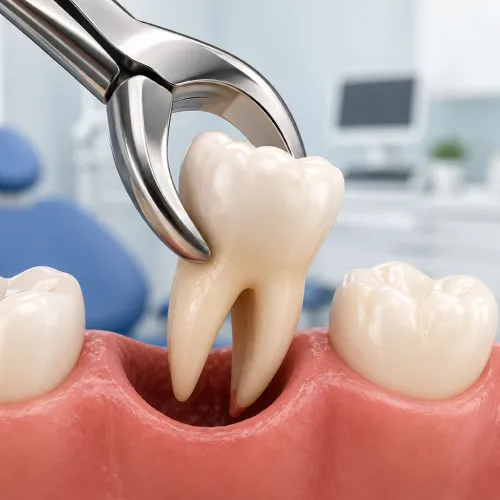
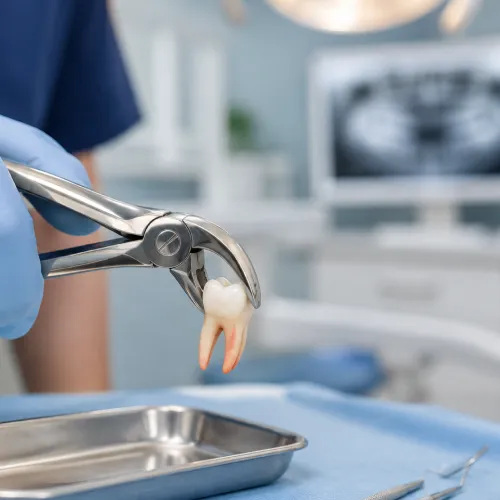
This step trips people up. They think an X-ray is just a formality. It is not. Root curvature, proximity to the inferior alveolar nerve, bone density, the angle of an impacted tooth all of this shapes the decision about what type of extraction is appropriate and how the procedure is planned. A dentist who recommends an extraction without imaging is skipping information they need to keep you safe.
If you have not had an X-ray taken and you are being told a tooth needs to come out, ask why not.
Some extractions are not standalone procedures. If you are working toward dental implants or dentures, there is often a preparatory stage where teeth and sometimes some bone or gum tissue need to be addressed before anything can be placed. These are coordinated carefully so each stage of treatment connects to the next without gaps or rework.
Al Rabeeh has two branches across Muscat, at Al Khoud and Maabilah, open seven days a week. If a tooth has been bothering you and you are not sure what kind of treatment you actually need, a proper clinical assessment with imaging is the right starting point. That conversation costs less than you think and answers more than you expect.
Simple or surgical: neither has to be the experience you are picturing. Understanding how to painlessly remove a tooth starts well before you sit in the chair. It starts with the right imaging, a dentist who explains the plan in plain language, and knowing what recovery looks like before you leave the clinic.
Local anaesthetic handles the pain side of the equation. The rest is about preparation, the right specialist, and going in informed. You know which procedure you need, you know how long recovery takes, and you know what your aftercare looks like.
So here is the question: is there a tooth you have been putting off dealing with longer than you should have?
Yes, and it is not complicated. Local anaesthetic is injected around the tooth before anything else happens. Once that kicks in, you feel pressure and movement but not pain. The soreness comes later, once the anaesthetic wears off, and that is managed with standard pain relief. Most people say the anticipation was worse than the procedure.
They look at your X-ray. Specifically, they are checking root shape, whether the tooth is intact above the gum, and whether it is stuck to the bone or buried under tissue. You cannot determine this from symptoms alone. The imaging tells the story.
Pain is not the only reason a wisdom tooth should be removed. Crowding, repeated infection in the area, a tooth that cannot be cleaned properly, or a tooth that is pushing against the molar beside it are all valid reasons your dentist might recommend removal even if you are not in active pain. Left alone, these situations tend to escalate.
Simple extraction: most people are fine the next day. Surgical extraction: plan for two to three days of taking it easy, especially if wisdom teeth are involved. Swelling peaks around day two, then improves. Soft foods and salt rinses make a real difference. Most people overestimate how long it takes.
Usually yes, but your dentist needs the full picture first. Blood thinners, diabetes, hypertension, and certain medications all affect how a procedure is planned and managed. Any clinic that skips a medical history review before performing an extraction is cutting a corner they should not be cutting.
This article has been medically reviewed by Dr. Muhammad Ahmad Gulzar, Specialist Oral and Maxillofacial Surgeon at Al Rabeeh Dental Center, Oman. Dr. Gulzar specializes in advanced oral surgeries, complex tooth extractions, dental implants, and painless surgical techniques designed to ensure maximum patient comfort and rapid recovery.


Al Rabeeh Dental Center provides comprehensive, ethical dental care using international standards and advanced technology to deliver healthy, confident smiles.
©2026. Al Rabeeh Dental Center LLC.All Rights Reserved. Powered by SilverHost

