Working Hours
Monday - Sunday: 9:30 AM – 9:30 PM
Friday- 9:30AM-12:00PM,1:30PM-9:30PM
Friday- 9:30AM-12:00PM,1:30PM-9:30PM
Working Hours

Most people skip their dental appointment, thinking, “My teeth feel fine. Nothing hurts. I’ll go next time.” That logic is completely understandable and almost completely wrong. A routine dental cleaning is not just about polishing your teeth. It sits at the core of general dentistry, the branch of care focused on prevention, early detection, and keeping your teeth and gums functional for life. And the longer you push it back, the worse and more expensive those problems get.
Here is exactly what happens to your mouth when you skip it, broken down month by month.
Table Of Contents:
This is the quiet phase. Plaque starts accumulating along your gumline. You brush and you floss, but plaque builds in spots your toothbrush simply cannot reach. Within weeks, some of that plaque hardens into tartar, which no amount of brushing will remove at home.
You feel nothing. That is the problem.
At the three-month mark, a dentist performing a professional teeth cleaning would scrape that tartar away in one short appointment. Skip it, and the deposit stays, and it grows.c
Tartar sitting against your gum tissue causes low-grade inflammation. Your gums might bleed slightly when you brush. You might notice them looking a little redder than normal. Most people assume they brushed too hard and move on.
This stage is the beginning of gingivitis, the mildest form of gum disease.
The encouraging thing about gingivitis caught here is that it is fully reversible with a proper dental checkup and a thorough cleaning. The discouraging thing is that most people do not know they have it.
Now two things are happening at once. Bacteria feeding on tartar are releasing acids that attack your enamel. Small cavities begin to form, usually between teeth or along the gumline where you cannot see them. At the same time, untreated gingivitis starts moving deeper into the gum tissue.
A cavity at this stage is small, maybe 2 millimetres. It needs a filling and nothing more. A 15-minute procedure.
Wait another few months, and that same cavity reaches toward the nerve. Now you are looking at a root canal instead of a simple filling. The pain, the time, and the cost all increase dramatically.
Your oral hygiene habits at home matter, but they cannot compensate for what a professional teeth cleaning removes. Your toothbrush does not touch tartar. Full stop.
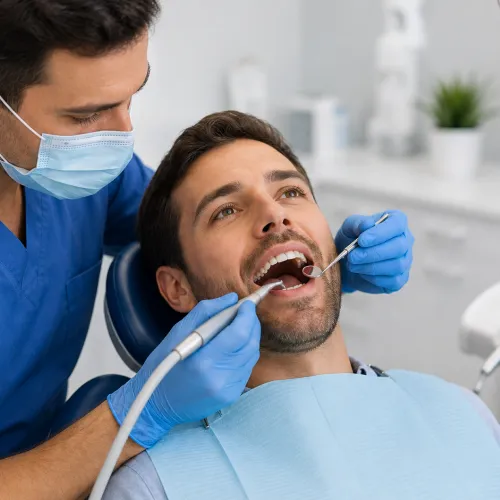
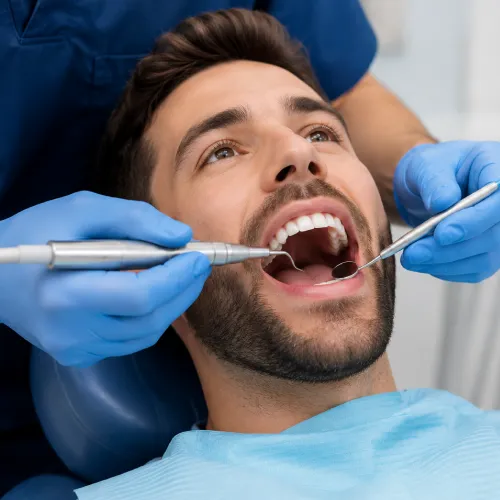
This is where the conversation shifts from your mouth to your body.
Research consistently links untreated gum disease to a higher risk of heart disease, diabetes complications, and respiratory issues. The bacteria from infected gum tissue enter your bloodstream and can trigger inflammation in other parts of the body.
At this stage, what started as a skipped cleaning has become a periodontal infection. Bone loss around teeth becomes possible. Teeth become loose. Treatment at this point is longer, more involved, and requires several visits to fully address.
None of this is meant to frighten you. It is meant to give you an honest picture of how predictable this progression is and how preventable it remains at almost every stage
Some extractions are not standalone procedures. If you are working toward dental implants or dentures, there is often a preparatory stage where teeth and sometimes some bone or gum tissue need to be addressed before anything can be placed. These are coordinated carefully so each stage of treatment connects to the next without gaps or rework.
Al Rabeeh has two branches across Muscat, at Al Khoud and Maabilah, open seven days a week. If a tooth has been bothering you and you are not sure what kind of treatment you actually need, a proper clinical assessment with imaging is the right starting point. That conversation costs less than you think and answers more than you expect.
Skipping a routine dental cleaning is rarely a one-time decision. It usually becomes a habit, and that habit has a predictable and well-documented outcome. The good news is that it is almost never too late to reset. Wherever you are in that timeline, a cleaning appointment stops the progression.
So here is the question worth sitting with: If you knew that one hour in the chair today could save you a root canal, a course of antibiotics, or a tooth extraction six months from now, would that change anything about your next appointment?
For most adults, twice a year is the standard. Some people with a history of gum disease or heavy tartar buildup may need it every three to four months. Your dentist will tell you which category you fall into after your first checkup.
Honestly, the most important thing you can do is just go. Dentists see this regularly. A longer gap usually means more tartar buildup and possibly early gum disease, but both are treatable. The exam will show exactly where things stand and what, if anything, needs to be done.
Simple extraction: most people are fine the next day. Surgical extraction: plan for two to three days of taking it easy, especially if wisdom teeth are involved. Swelling peaks around day two, then improves. Soft foods and salt rinses make a real difference. Most people overestimate how long it takes.
Depends on where your oral health already sits. For someone with healthy gums and no active decay, one missed visit is less critical. For someone with early gum disease or a history of cavities, even one skipped visit can allow a small problem to grow into a larger one.
No. Brushing and flossing are essential for daily plaque control, but once plaque hardens into tartar, only a professional cleaning removes it. Think of it as the difference between mopping a floor and stripping and resealing it.
This article has been medically reviewed by Dr. Mohammed Zaheer, General and Cosmetic Dentist at Al Rabeeh Dental Center, Oman. Dr. Zaheer specializes in preventative family dentistry, root canal treatments, and comprehensive oral rehabilitation aimed at protecting natural teeth and maintaining long-term wellness.
Skipping a routine dental cleaning might seem harmless when your teeth feel fine, but major oral health issues are notoriously silent in their early stages.


Al Rabeeh Dental Center provides comprehensive, ethical dental care using international standards and advanced technology to deliver healthy, confident smiles.
©2026. Al Rabeeh Dental Center LLC.All Rights Reserved. Powered by SilverHost

